The Value of Feedback in Writing Improvement
Feedback is the engine of writing improvement — but only when it's the right kind, at the right time, framed in the right way. Here's what effective writing feedback actually looks like.
By LTWN Editorial · July 15, 2023
Quick Answer
Effective feedback is specific, focused on one or two issues at a time rather than marking every error, given while the student can still revise (not after a final grade), and often framed as a question that lets the student find the fix themselves.
Writing is one of the few academic skills where feedback is not just helpful — it is essential. You cannot become a significantly better writer by writing in isolation, any more than you can become a better tennis player by hitting balls against a wall indefinitely. Improvement requires a skilled observer who can see what you can't see yourself and redirect your effort toward what will actually help. The question is not whether to give feedback, but how.
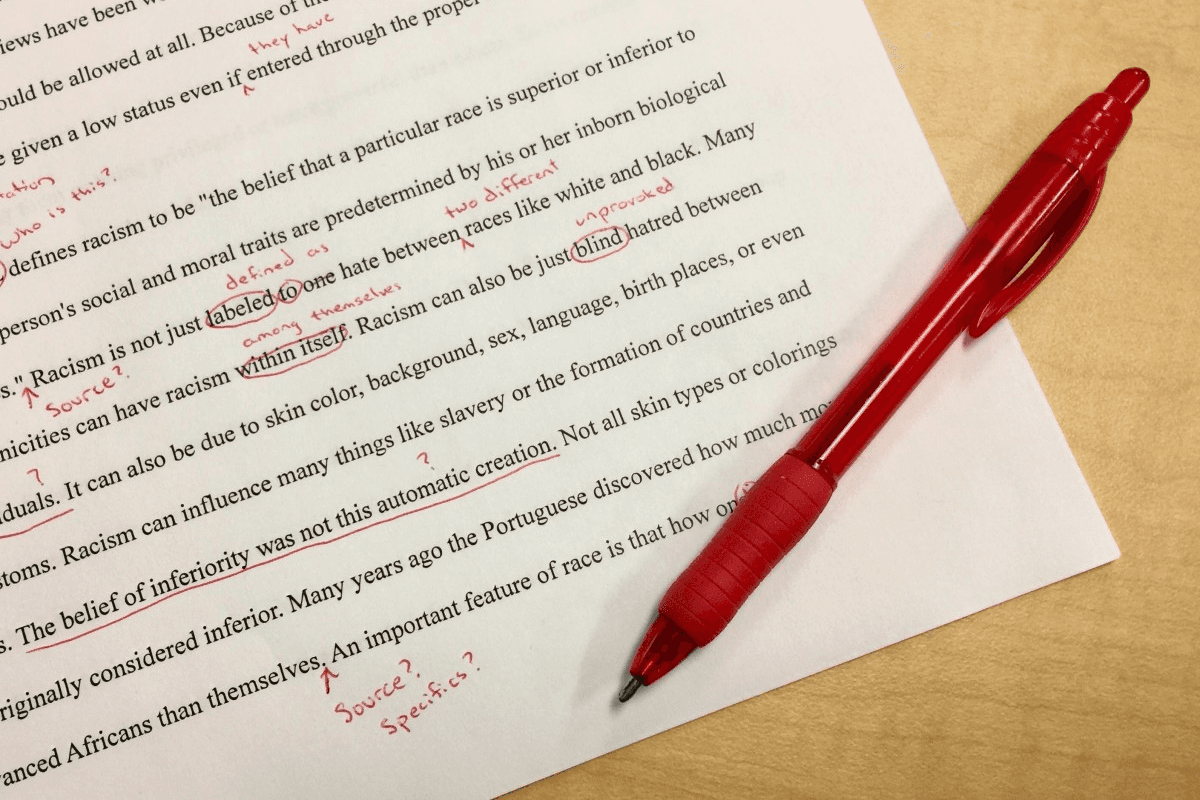
Research on feedback in writing instruction points to a consistent finding: the most effective feedback is specific, actionable, and focused on a limited number of issues. The instinct of many well-meaning readers is to mark everything — every grammatical error, every awkward phrase, every organizational problem. But a student staring at a paper covered in red marks typically does one of two things: they feel overwhelmed and revise nothing, or they make surface-level corrections without understanding why. Neither response produces growth.
Better feedback identifies the one or two most important things a student can work on in this draft and explains clearly what to do about them. Not "this paragraph is unclear" but "the reader doesn't understand what you're arguing in this paragraph because there's no topic sentence — add a sentence at the beginning that tells the reader what the paragraph is about." The specificity is what makes the feedback usable.
Timing also matters. Feedback given while a student is still working on a draft (formative feedback) is significantly more useful than feedback given after a final grade (summative feedback). When students know a draft will be revised, they engage with feedback differently — as information for improving the work, rather than as a judgment on their ability. Building revision cycles into writing instruction is one of the most effective structural changes a teacher or tutor can make.
One of the most powerful feedback techniques is the "question-based" approach: instead of telling a student what to fix, ask questions that draw their attention to the problem and let them arrive at a solution. "What is the main point of this paragraph?" "What does the reader need to know before this sentence will make sense?" "Is there anything in this section that surprises you?" These questions activate the student's own editorial judgment rather than making them dependent on external correction — which is ultimately what we want to develop.
Frequently Asked Questions
Why doesn't marking every error on a paper help students improve?
Because a paper covered in corrections overwhelms students into either not revising at all or making only surface-level fixes without understanding why, neither of which builds skill.
Why does timing matter for writing feedback?
Feedback given while a draft can still be revised is far more useful than feedback given after a final grade, because students engage with it as information to improve the work rather than a judgment on their ability.
What is question-based feedback?
Asking questions like "What is the main point of this paragraph?" instead of directly stating the fix, which activates the student's own editorial judgment rather than making them dependent on being told what to change.
Related Program
Online Writing Classes for Kids
Year-round writing enrichment for grades 2-8
Explore this program →